Flexi Shark: Articulated 3D Print Guide
The ocean has always held a certain mystique, captivating imaginations with its depth and the creatures that dwell within. For makers and collectors alike, bringing a piece of that marine world into the physical realm is a rewarding challenge. The Flexi Shark emerges as a standout project in this space, offering more than just a static figurine. It is an articulated model designed to move, flex, and engage, transforming a standard 3D print into a dynamic desk companion or educational tool. Whether you are printing your first flexible object or looking for a reliable product to add to a commercial catalog, understanding the nuances of this model can significantly enhance your experience.
Understanding the Design Mechanics
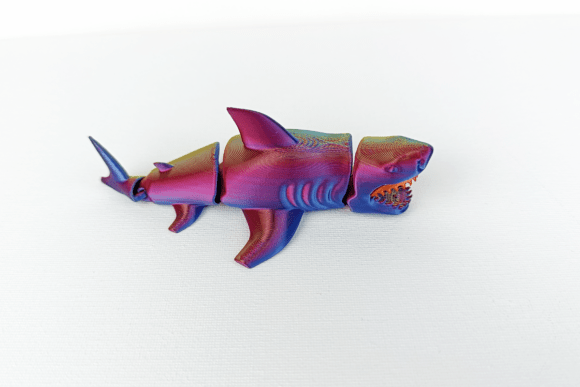
At its core, the Flexi Shark is a testament to the capabilities of modern FDM (Fused Deposition Modeling) 3D printing. Unlike traditional models that require complex assembly of rigid parts, this shark features a body printed in multiple interconnected segments. This design allows for smooth, fluid movement that mimics the swimming motion of a real shark. The result is a satisfying tactile experience; holding the model and watching it undulate provides a unique sensory feedback loop that static prints simply cannot match.
The attention to detail extends beyond mere flexibility. The model includes realistic fins, gill slits, and teeth, contributing to a high-quality aesthetic. However, the design does require a small amount of post-processing. The upper jaw is printed as a separate component and must be glued to the head after printing. This two-part approach ensures that the intricate details of the mouth and teeth remain sharp and distinct, rather than being compromised by the support structures or layer lines often found in fully articulated prints. Using a standard super glue or similar adhesive creates a permanent, clean bond, finalizing the look with minimal effort.
Why Beginners Will Appreciate the Simplicity
For those new to 3D printing, the prospect of printing articulated models can seem daunting. Many flexible designs require precise calibration, specific materials, or difficult support removal. The Flexi Shark, however, is optimized for accessibility. It requires no supports, which eliminates one of the most frustrating aspects of beginner printing: cleaning up messy scaffolding without damaging the model.
The recommended print settings are forgiving and standard. A layer height between 0.16 mm and 0.2 mm offers a good balance between speed and surface quality. An infill of 10–15% is sufficient to maintain structural integrity while keeping the segments light enough to move freely. PLA is the recommended material, not only because it is the most common and affordable filament but also because it prints at lower temperatures, reducing the risk of warping or stringing. For a novice, successfully printing a moving object on the first try builds confidence and encourages further exploration into more complex geometries.
Value for Educators and Content Creators
Educators and science communicators often seek tools that bridge the gap between abstract concepts and tangible understanding. The Flexi Shark serves as an excellent visual aid for discussing marine biology, anatomy, or even the principles of kinetic art. In a classroom setting, passing around a model that moves allows students to engage with the subject matter physically. It transforms a lesson about shark locomotion from a textbook diagram into a hands-on demonstration.
Similarly, content creators and bloggers focused on DIY projects or tech reviews find value in the visual appeal of the model. The dynamic nature of the shark makes for engaging video content. Time-lapses of the printing process, followed by close-ups of the articulated movement, perform well on social media platforms. The distinct "wow factor" of a flexible print helps capture audience attention in a crowded digital landscape. Furthermore, the ease of printing means creators can produce multiple units for giveaways or demonstrations without significant time or material costs.
Commercial Potential for Small Business Owners
Entrepreneurs and small business owners operating in the niche of 3D printed goods often look for models that offer high perceived value with low production friction. The Flexi Shark fits this criteria effectively. Its detailed appearance and interactive element allow it to command a higher price point than simple static figurines. It appeals to a broad demographic, including ocean lovers, office workers seeking unique desk decorations, and parents looking for durable, non-electronic toys for children.
From a production standpoint, the lack of supports reduces post-processing time, which is a critical factor in profitability. While the upper jaw requires gluing, this step is quick and can be streamlined in a batch production environment. The reliability of the print settings means fewer failed prints and less wasted material. For sellers on platforms like Etsy or at local craft fairs, the Flexi Shark represents a low-risk, high-reward item that can serve as an entry-level product to attract new customers.
Considerations for Experienced Makers
Even for seasoned professionals, the Flexi Shark offers opportunities for refinement and experimentation. While the default settings work well, experienced users might tweak parameters to achieve specific aesthetic or functional goals. For instance, adjusting the horizontal expansion or flow rate can tighten the tolerances between segments, resulting in smoother movement or a tighter fit, depending on preference. Some may choose to experiment with different filaments, such as PETG for increased durability or silk PLA for a shimmering, scale-like appearance that enhances the visual realism.
Professionals may also look at the model from a design perspective, analyzing how the articulation points are structured. This can provide insights into creating custom articulated models for other animals or mechanical parts. The Flexi Shark serves as a case study in balancing flexibility with structural strength, a common challenge in advanced 3D printing projects.
Practical Printing Tips for Best Results
To ensure the best outcome with your Flexi Shark, consider these practical adjustments based on your specific printer and environment:
- Bed Adhesion: Even though supports are not required, good bed adhesion is crucial for the first layer. Use a brim if your printer tends to have corner lifting issues, especially with larger base plates.
- Cooling: Ensure your part cooling fan is running at 100%. Proper cooling helps each segment solidify quickly, preventing them from merging together and ensuring smooth articulation.
- Gluing Technique: When attaching the upper jaw, use a toothpick to apply a tiny amount of super glue. This prevents excess adhesive from squeezing out and marring the visible details of the shark’s face. Hold the parts firmly for a few seconds to set the bond.
- Material Choice: Stick to PLA for the easiest experience. If you live in a hot environment, consider PETG, but be aware that it may require slight tuning of retraction settings to avoid stringing between the segments.
Is the Flexi Shark Right for You?
Deciding whether to download and print this model depends on your current goals. If you are a beginner looking for a confidence-boosting project that yields a impressive result, the Flexi Shark is an ideal choice. Its support-free design and standard material requirements remove many common barriers to entry. For educators, it offers a durable, engaging tool for teaching marine concepts. For business owners, it provides a commercially viable product with efficient production workflows.
However, if you are looking for a highly complex engineering challenge or a model that requires no post-processing whatsoever, you might find the gluing step minor but notable. Yet, for the vast majority of users, the trade-off is negligible compared to the joy of owning a moving, lifelike shark. The Flexi Shark stands as a versatile addition to any 3D printing portfolio, blending aesthetic appeal with functional design in a way that resonates across skill levels and interests. It is not just a print; it is a conversation starter, a teaching aid, and a satisfying piece of kinetic art.