Creating a Christmas Triangular Paper Lantern: A Practical Guide to Design, Assembly, and Lighting Choices
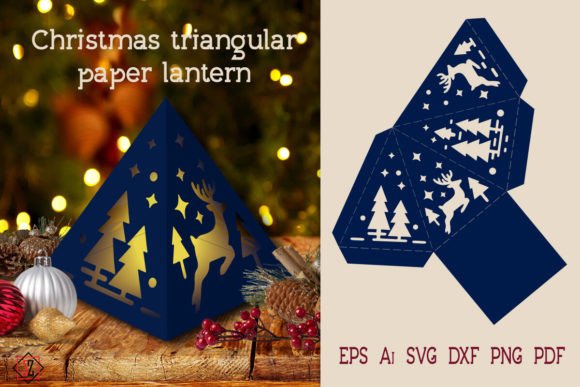
The Christmas Triangular Paper Lantern represents a specific niche within holiday crafting that balances geometric modernism with traditional warmth. Unlike the ubiquitous spherical paper lanterns or the flat, two-dimensional window silhouettes often seen during the festive season, this triangular design offers a distinct architectural presence. Standing approximately 10 cm in height with an 8x8 cm base, it serves as an ideal accent piece for mantels, dining tables, or shelving units where space is at a premium but visual impact is required. The core of this project lies in the precision of the stencil and the quality of the assembly, transforming a simple sheet of A4 paper into a structured, light-emitting decor item.
When evaluating whether to pursue this specific craft project, it is essential to understand what differentiates it from other DIY holiday decorations. The primary distinction is the structural complexity derived from the triangular geometry. While many paper crafts rely on folding alone (origami) or simple gluing of flat layers, this lantern requires the integration of a cut-out stencil to create depth and pattern. The design typically involves intricate paper cutting that allows light to filter through in specific patterns, mimicking the effect of stained glass or lace without the fragility or cost of those materials. The result is a freestanding object that holds its shape rigidly, providing a stable platform for illumination.
Evaluating the Stencil Approach Versus Freehand Cutting
A critical decision point for any crafter considering this project is the method of pattern creation: utilizing a pre-designed digital stencil versus attempting a freehand design. For the Christmas Triangular Paper Lantern, the stencil approach offers significant advantages in terms of symmetry and structural integrity. The template, designed to fit standard A4 paper, ensures that the folds align perfectly to create the 10 cm height and 8x8 cm base. Deviating from a precise template can lead to gaps in the seams or uneven lighting distribution, which detracts from the professional finish of the final product.
Pre-made stencils, available in formats such as AI, EPS, SVG, DXF, PDF, and PNG, cater to a wide range of tools and skill levels. This versatility is a major strength. If you possess a digital cutting machine (such as a Cricut or Silhouette), the vector files (SVG, DXF, EPS, AI) allow for automated precision, ensuring that even the most delicate bridges in the paper design remain intact. Conversely, for those who prefer traditional hand-cutting with an X-Acto knife or scalpel, the high-resolution PDF or PNG (300 dpi) provides a clear, printable guide. This dual compatibility makes the project accessible to both tech-savvy makers and traditionalists.
In contrast, freehand cutting requires a high degree of artistic confidence and spatial reasoning. While it allows for total creative freedom, the risk of error is substantial. A miscalculated cut in a load-bearing section of the triangle can cause the lantern to collapse under its own weight or fail to stand upright. Therefore, for users seeking a reliable, repeatable result that fits specific dimensional constraints, the stencil method is objectively superior. It removes the variable of human error in the design phase, allowing the crafter to focus entirely on the execution of the cut and the quality of the assembly.
Material Considerations and Paper Weight Tradeoffs
The success of a Christmas Triangular Paper Lantern is heavily dependent on the choice of paper. The stencil is designed for A4 sheets, but not all A4 paper behaves the same way. When selecting your material, you must balance translucency with structural rigidity. Standard printer paper (approx. 80 gsm) is often too flimsy for a freestanding structure of this height; it may warp when glued or sag over time, compromising the sharp triangular lines. On the other end of the spectrum, heavy cardstock (over 200 gsm) provides excellent stability but can be difficult to cut intricately without tearing, especially if working by hand.
A mid-weight paper, such as 120–160 gsm specialty craft paper or vellum, often presents the best compromise. These weights are sturdy enough to maintain the 10 cm height without buckling yet thin enough to allow LED light to diffuse softly through the cut-out patterns. Furthermore, the texture of the paper plays a role in the aesthetic outcome. A smooth, matte finish tends to reflect light evenly, enhancing the glow, while textured papers can add a rustic charm but may cast irregular shadows. For those using digital cutters, testing the blade depth on scrap pieces of the chosen paper is a necessary step to ensure clean cuts without piercing the backing mat unnecessarily.
Illumination Options: Safety and Aesthetic Impact
Once the lantern is constructed, the choice of lighting becomes the final defining factor. The design specifications explicitly recommend LED candles for safety, a guideline that should be strictly adhered to. Paper is inherently combustible, and placing an open flame inside a confined 10 cm structure creates a significant fire hazard. Beyond safety, LED technology offers practical benefits for this specific application. Battery-operated tea lights or small fairy light strings generate negligible heat, preventing the paper from drying out, curling, or discoloring over the holiday season.
From an aesthetic perspective, the color temperature of the LED source alters the character of the lantern. A warm white LED (2700K–3000K) enhances the cozy, traditional feel of a Christmas decoration, casting a golden glow that highlights the intricacies of the paper cutting. Cool white LEDs, while brighter, can sometimes make the paper appear stark or clinical, which may clash with typical holiday decor themes. Additionally, flickering LED candles can simulate the dynamic movement of a real flame, adding life to the static paper structure, though a steady light source often provides better clarity for detailed stencil patterns.
Comparing this to other lighting methods, such as string lights woven through larger installations, the enclosed nature of the triangular lantern concentrates the light. This creates a focused beacon rather than a diffuse ambient glow. This makes it particularly effective as a centerpiece or a pathway marker, where directed light is more desirable than general illumination.
Scalability and Customization Potential
One of the often-overlooked advantages of digital stencil files is their scalability. While the default design targets a 10 cm height and 8x8 cm base, the availability of vector formats (AI, EPS, SVG, DXF) allows users to resize the template proportionally before printing or cutting. This flexibility enables crafters to adapt the Christmas Triangular Paper Lantern to different spatial requirements. For instance, enlarging the design could create a floor-standing feature for a corner display, while reducing it might yield miniature ornaments for a Christmas tree.
However, scaling does introduce variables that must be managed. Enlarging the design significantly may require switching to heavier paper or even thin cardboard to maintain structural integrity, as the surface area increases exponentially. Conversely, shrinking the design too much can make the intricate cut-outs impossible to weed or assemble without breaking delicate paper bridges. Understanding these physical limitations is crucial when deciding to deviate from the standard A4 dimensions. The original size is engineered for optimal balance between detail and durability, making it the safest starting point for first-time builders.
Is This Project Right for Your Holiday Decor?
Determining whether to invest time in creating this lantern depends on your specific decorating goals and available resources. The Christmas Triangular Paper Lantern is an excellent choice if you value unique, handmade elements that offer a modern geometric twist on traditional motifs. It is particularly well-suited for individuals who enjoy the process of precise cutting and assembly and have access to either a digital cutter or steady hands for manual work. The ability to produce multiple units quickly from a single downloaded zip file also makes it a viable option for those looking to create cohesive sets of decorations for events or gifts.
However, this may not be the ideal solution for everyone. If your priority is speed and you lack the tools or patience for intricate cutting, pre-made plastic or fabric lanterns might be more appropriate. Similarly, if you require outdoor decorations, paper is generally unsuitable unless treated for weather resistance, which can alter its translucency. The project shines brightest in controlled indoor environments where its delicate details can be appreciated up close.
Ultimately, the value of this craft lies in the customization and the satisfaction of creation. By downloading the template, selecting the right paper, and pairing it with safe LED lighting, you transform a digital file into a tangible source of holiday warmth. Whether used as a solitary statement piece or part of a larger arrangement, the triangular lantern offers a refined, elegant alternative to mass-produced decor, bridging the gap between digital convenience and analog craftsmanship.